Project Overview
This project involved a statistical evaluation of Piping Plover chick survival comparing treatment nests (nests protected by cages) versus control nests (unprotected nests). The analysis was conducted using the R programming language to assess the effectiveness of caging as a conservation strategy.
Objective
To determine whether caging Piping Plover nests significantly improves chick survival rates compared to non-caged (control) nests, while also assessing potential regional differences in survival.
Methods
- Data Collection: Chick survival outcomes were recorded for both treatment and control nests across multiple regions.
- Statistical Software: Analysis conducted using R.
- Statistical Tests:
- Chi-squared tests to compare survival proportions.
- Logistic regression models to assess survival based on treatment and region.
- Visualization: Survival outcomes were plotted using bar graphs and survival curves.
Results
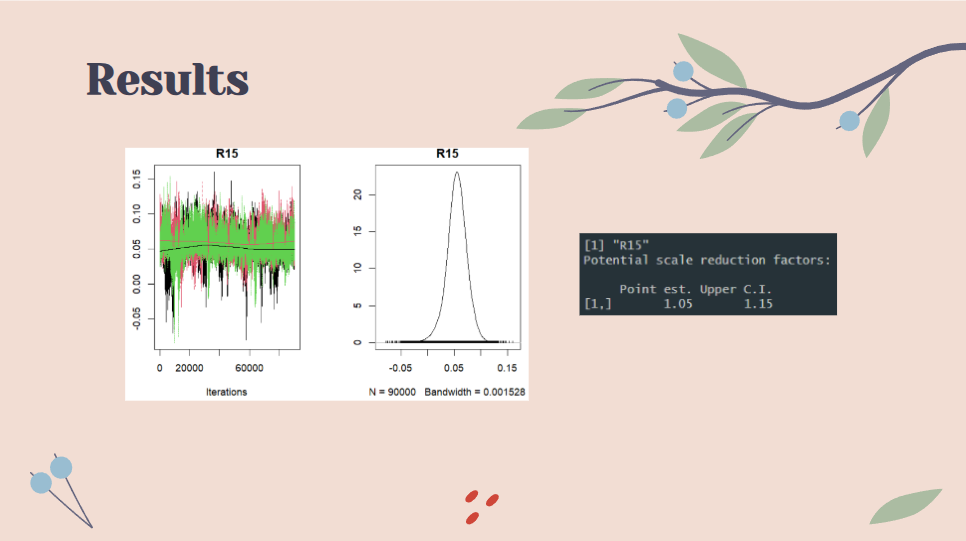
Due to the poor goodness of fit, caution should be taken when interpreting these results.
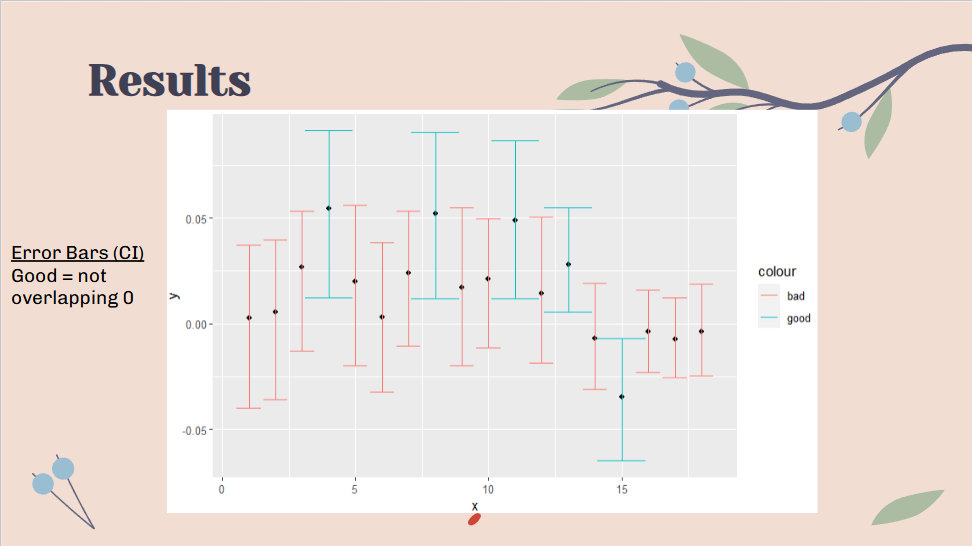
- There is a potential region effect on chick survival. Region 5 had five significant comparisons:
- Four comparisons were positive, meaning that regions 1–4 had higher apparent survival than region 5.
- One comparison (Region 6 vs. 5) was negative, meaning that region 6 had higher apparent survival than region 5.
- Overall, region 5 appears to have lower apparent survival than other regions.
- Treatment effect: There were no statistically significant results suggesting that caged nests had higher post-fledge chick survival compared to non-caged nests.
- While caging may benefit nest success, it does not appear to confer a long-term survival advantage for chicks after fledging.
Limitations
The models and inferences are based on apparent survival, which accounts for individuals lost through death or emigration from the study area. Recapture probability was not directly assessed; only apparent survival was analyzed.
Assumption Violations
One important assumption that may have been violated is that individual survival fates are independent. Groups of nestmates tend to stay together under parental care, meaning that one chick’s survival outcome could influence others (e.g., increased predator attention or disease transmission within a brood). This potential dependence could affect the validity of the statistical inferences.
Screenshots
Technologies Used
- R Programming Language and R Studio
- nimble package for advanced biological statistical analyses
Reflections
This project marked a turning point in my life. While diving deep into the R programming language to uncover patterns in plover chick survival, I realized how much I enjoyed the process of writing code and using data to tell/show stories about the natural world. It helped me recognize the powerful connections between ecology and computer science; How technical tools can be used for real-world conservation decisions. This experience ultimately inspired me to return to school to pursue a degree in computer science, with the goal of combining both fields to create impactful, data-driven solutions for wildlife research and beyond!